
If you have found yourself asking ChatGPT about your rights in a separation, a financial dispute, or a disagreement about the children, you are not alone. It is fast, it is free, and the answers sound clear and confident.
The problem is not that you are researching. The problem is when what an AI tells you starts to feel more reliable than what your solicitor is saying. In family law, that gap can cause real difficulties and, counterintuitively, it often ends up costing more.
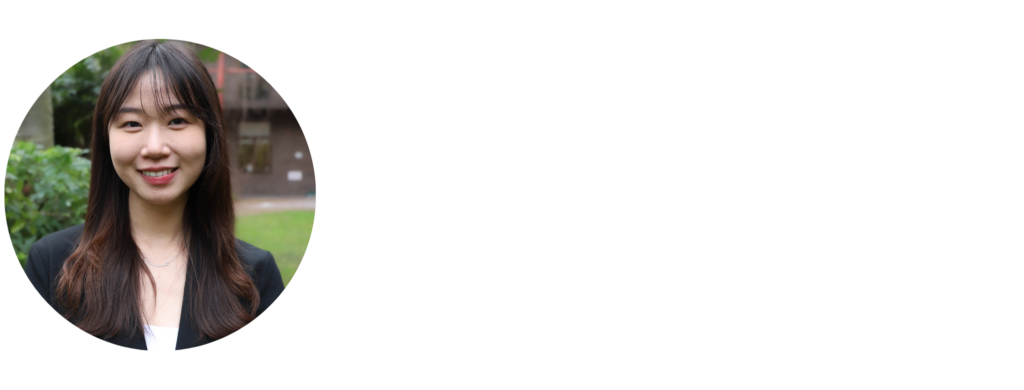
Written by Yi Ling Lio, Legal Assistant
AI-related “hallucination”
AI tools are designed to produce fluent and well-structured text, but they do not guarantee accuracy. AI tools have a tendency of so-called “hallucinating”, which means making up artificial laws or judgments.
In 2025, the High Court considered two cases in which legal submissions relied on authorities that simply did not exist. The Court said:
“Freely available generative artificial intelligence tools, trained on a large language model such as ChatGPT are not capable of conducting reliable legal research. Such tools can produce apparently coherent and plausible responses to prompts, but those coherent and plausible responses may turn out to be entirely incorrect. The responses may make confident assertions that are simply untrue. They may cite sources that do not exist. They may purport to quote passages from a genuine source that do not appear in that source.”
R (Ayinde) v London Borough of Haringey [2025] EWHC 1383 (Admin)
If AI‑generated information can appear authoritative even when it is not, it is easy to see how someone reading a polished AI response at midnight might place more confidence in it than is warranted.
Why your solicitor sounds less certain, and why that is a good sign
Family law is not a simple rulebook. Most of it turns on the specific facts of your situation: what assets there are, what each person needs, what the children’s circumstances look like, and what is actually achievable. Judges have broad discretion. Outcomes vary. AI may have a less complete version of your facts, producing inaccurate advice. Your solicitor’s advice will look different. It will be more considered, more caveated, and will often start with “it depends.”
This matters most in two areas.
- Financial disputes: where outcomes depend on needs, resources, the nature of assets, housing options, and what a court would consider fair in your specific situation. There is no formula.
- Children matters: where the court focuses entirely on the welfare of your child in your circumstances, not what an AI considers a reasonable outcome in the abstract.
Does using AI save money? Usually not
A common assumption is that researching online, or drafting letters with AI help, will reduce legal fees. In practice it often does the opposite: if AI has given you a confident but incorrect picture of your legal position, you arrive with a fixed view rather than an open question. The more persuasive the output, the harder that position is to shift.
Hardened positions are expensive. What might have settled early becomes contested, and costs on both sides rise. AI-drafted letters carry a similar risk: they can sound authoritative while containing inconsistencies, accidental admissions, or points that complicate your case rather than advance it.
Where things tend to go wrong
The issues are rarely dramatic. They are subtler, and harder to spot because AI output reads so plausibly.
Outcome predictions are the most common problem. AI is good at producing a plausible story about what a court is “likely” to do. It cannot weigh your actual evidence, assess how credible a witness might be, or account for the specific dynamics of your case. A prediction that sounds reasonable in the abstract may bear little resemblance to what a judge would actually do with your facts.
Procedural details are another gap. Family proceedings have timetables, deadlines, and disclosure requirements that vary depending on where your case is and what stage it has reached. A generic AI explanation may give you the wrong picture entirely, or omit steps that matter.
Rights-based framing is perhaps the subtlest issue. AI tends to present family disputes as questions of what you are owed. In reality, outcomes are shaped by a mix of legal principles, evidence, negotiation, and what is practically workable.
How to use AI sensibly
None of this means you should not research. Reading around a subject before a meeting is sensible. The question is what you use AI for, and how much weight you place on it.
- Use it for orientation, not answers. If you are about to discuss financial disclosure for the first time, asking an AI to explain what a Form E is, or what “non-matrimonial assets” means, is entirely reasonable. Using it to tell you what share of the assets you should expect is not.
- Bring it up early. If something you have found seems to conflict with advice you have received, bring it up at the start of the conversation rather than letting it sit as a silent source of doubt. It is quicker to address a misconception early than after a position has been taken.
- Be cautious about case references. If an AI response includes case names or quotes from judgments, treat those carefully. As the High Court made clear, AI tools have been shown to invent plausible-sounding references that do not exist.
- Treat certainty as a warning sign. If the answer reads like a guarantee, it is almost certainly missing the nuance that drives real outcomes. In family law, “it depends” is usually the honest starting point.
A word on where this advice is coming from
It is fair to note that solicitors have an obvious interest in clients not relying on free AI tools. We are aware of that. The reason we are raising it anyway is that we have seen, with some regularity, how AI-shaped expectations play out in practice: negotiations that take longer, positions that are harder to move, and costs that end up higher than they needed to be. This article is based on that experience, not on a general suspicion of technology.
In summary
AI is now how many people start thinking about a legal problem, and that is not going to change. Used carefully, it can help you feel more informed going into a first conversation. Used uncritically, it can set expectations that do not match reality and add cost at precisely the point you are trying to reduce it.
Clients who raise what they have read early, and treat it as a starting point rather than a conclusion, tend to get to the right outcome faster and with less difficulty along the way.
Have questions? Get in touch today!
Call us on 020 7928 0276, phone calls are operating as usual and we will be taking calls from 9:30am to 6:00pm.
Email us on [email protected].
Or, use the contact form on our website. Simply enter your details and leave a message, we will get right back to you: https://lisaslaw.co.uk/contact/
For more updates, follow us on our social media platforms! You can find them all on our Linktree right here.