
Family estate disputes often arise between family members during the administration of a deceased’s estate where insufficient estate planning and tense family relationships coincide.
In the recent case of Kaur v Kaur and others [2025] EWHC 2806 (Ch), an extended series of arguments between ten siblings was only resolved more than 10 years after the death of their mother. The conflicts stemmed from informal and unclear financial arrangements creating confusion and ultimately leading to litigation.
The case highlights the importance of clearly documenting all financial arrangements, even between family members. While it may feel uncomfortable to formalise private matters, failing to do so can result in costly and prolonged disputes.
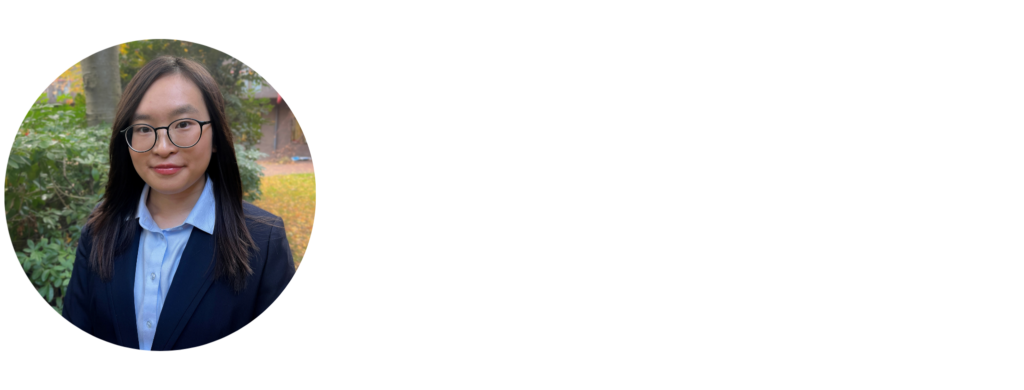
Written by Aurora Chan, Legal Assistant
The Facts of the Case
The court case mainly concerned two siblings: Kanta, who was the main Claimant, and Kouri, who was the main Defendant, in relation to the estate of their late mother (“Mother”).
Due to a series of ongoing disputes between the siblings, the administration of the estate had become stalled indefinitely and could not progress.
The main points of conflict were as such:
The Family Home Mortgages
- The family home, which belonged to Mother, was subject to three mortgages;
- The funds released were given to Kouri’s business;
- Kanta alleged that the funds were loans to Kouri, not gifts, and should therefore be repaid to the estate
- Kanta also alleged Kouri had arranged the mortgages without Mother’s knowledge.
Gold Jewellery
- Mother owned a substantial amount of gold jewellery.
- Kanta alleged that Kouri had
- (a) misappropriated the jewellery, and
- (b) distributed them improperly, in breach of her duties as executor.
Rental Income
- After Mother’s death, several individuals lived in the Family Home.
- Kanta alleged Kouri had been inappropriately collecting rent
- Kanta claimed the rent should be accounted for to the estate.
The “Heads of Agreement”
- The siblings disagreed on whether a “heads of agreement” document was legally binding.
Decisions of the Court
The Family Home Mortgages
The Court held that the mortgages effectively constituted a loan from Mother to Kouri.
The Legal Position
It is generally presumed that transfers for value are made with an expectation of repayment or return. However, where the transfer is from parent to child (or from husband to wife), there is a “presumption of advancement” that it is a gift (as established in Bennet v Bennet (1879)).
The presumption of advancement has been subject to criticism arguing it reflects outdated gendered assumptions, since it traditionally only applies for transfers from father to child or from husband to wife. The Equality Act 2010 provided for its abolition but the provision has not been brought into force.
The Judge’s Views
The judge confirmed that the presumption of advancement remains relevant in modern society. It reflects a common social practice in our current economic climate where parents often provide financially support to their children, for example with deposits for houses or funds for starting a business.
The presumption can be rebutted by evidence showing an intention to the contrary.
The judge also emphasised that the presumption can still apply even where the child is financially independent or is an adult, although the strength can vary.
Application to the Case
Despite the presumption of advancement, the judge decided the arrangement between Mother and Kouri was a loan, not a gift, as:
- Kouri had been making repayments towards the mortgages with interest, and
- Kouri contributed to Mother’s expenses for the duration of the arrangement
However, the judge noted the case was difficult to determine, as there was no direct evidence of Mother’s intentions. He felt that it was likely neither Mother nor Kouri had given much thought to the arrangements, which led to the arrangements being ill-defined and uncertain.
Judgement
Kouri owed an equitable debt to the estate, equalling to:
- the total sum of mortgages taken out on the Family Home (£130,000)
- minus the total sum Kouri had already repaid to Mother (£50,000)
- minus another sum Kouri had paid on behalf of Mother (£25,000).
Kouri therefore had to pay £55,000 to the estate.
Gold Jewellery
The judge held that Kouri had acted appropriately in regards to the jewellery.
- Kouri had rightly removed the jewellery per Mother’s instructions to safeguard it, and
- Kouri was entitled to distribute the jewellery among the children and grandchildren according to the will.
Mother’s will stated the gold in the Safe Deposit Box should be “divided between my children” according to the absolute discretion of her executors.
The judge held that the power to distribute to children should also include power to distribute to the children’s children, and thus Kouri was entitled to reserve some pieces for the grandchildren as wedding gifts.
Rental Income
The judge held there was insufficient evidence that Kouri had received any rental income not accounted for to the estate, so the claim failed.
The Heads of Agreement
The judge held that the document was not legally binding.
- It is unusual for family arrangements to be intended as legally binding contracts, unless there is a clear intention to the contrary.
- There was no evidence of such intention.
- The choice to name it “Heads of Agreement” rather than “Contract” under the advice of solicitors indicated otherwise.
Implications and Takeaways
This case demonstrates the serious consequences of failing to properly document financial arrangements within families. The dispute lasted over a decade, and a significant portion of the estate was consumed by legal costs.
A key issue was that the family did not consider estate planning necessary, as they did not view themselves as having substantial assets. As a result, many arrangements were informal, undocumented, and not carefully considered. This left the issue open to dispute by the siblings.
Therefore, proper estate planning is essential even if you feel you do not have a lot of assets.
The following points should be considered:
Discuss Financial Arrangements Openly
Much of the problems in the case came out of the secrecy around Mother’s financial affairs. This left Mother’s intentions around the loan or gift to Kouri unclear.
Open discussion with family members regarding your financial arrangements can clarify intentions and prevent misunderstandings.
Secrecy can also lead to suspicion and distrust, so transparent and honest discussion prevents any unexpected surprises which may cause disputes.
Be Aware of the Presumption of Advancement
The judge in this case reaffirmed that the presumption of advancement still remains relevant and applicable.
This means that transfers to family members could be assumed to be a gift unless explicitly made clear otherwise.
If the transfer is not a gift, this must be clearly documented; without any evidence of intention, it would be difficult to recover funds.
Common Issue
Parents often contribute funds for their child to purchase a property. This will be presumed as a gift to the child and the house may become matrimonial property if the child married, and as such subject to division upon divorce. A prenuptial agreement could help to protect these contributions and clarify ownership.
Ensure Proper Estate Planning
Even where you feel that your assets are not substantial, a clear and comprehensive will is essential to prevent any disputes and ensure your wishes are carried out.
A well-drafted will should:
- Clearly set out how all your assets are to be distributed;
- Avoid any ambiguity; and
- Minimise the risk of disputes.
There may be subtle legal ambiguities that a layperson is unlikely to recognise, so a professionally drafted will is a safer and more reliable option.
How We Can Help
If you are involved in a family estate dispute or want to take steps to prevent one, early legal advice can make a significant difference.
- Advice on family estate disputes, including contentious probate disputes, such as challenges to wills or disagreements between beneficiaries;
- Assist with issues in estate administration, such as executor disputes;
- Draft professionally drafted wills to ensure your intentions are clear and legally effective;
- Providing estate planning advice to minimise the risk of future disputes; and
- Preparing formal agreements for family financial arrangements (such as deeds of gift) to ensure clarity.
Have questions? Get in touch today!
Call us on 020 7928 0276, phone calls are operating as usual and we will be taking calls from 9:30am to 6:00pm.
Email us on [email protected].
Or, use the contact form on our website. Simply enter your details and leave a message, we will get right back to you: https://lisaslaw.co.uk/contact/
For more updates, follow us on our social media platforms! You can find them all on our Linktree right here.