
One of the most misunderstood aspects of civil litigation in England and Wales is the Part 36 Offer. Many clients believe that if they win their case, they will recover their legal costs from the other side. Unfortunately, litigation is rarely that straightforward.
A recent High Court decision demonstrates a harsh reality: a party may succeed at trial, recover damages, yet still be ordered to pay the majority of the opponent’s legal costs. That is precisely what happened in The Wine Enterprise Investment Scheme Ltd (in liquidation) v Crowe U.K. LLP [2026] EWHC 1662 (Ch).
Below, we explain what a Part 36 Offer is, how it works, and what this recent decision means for anyone bringing or defending a claim.
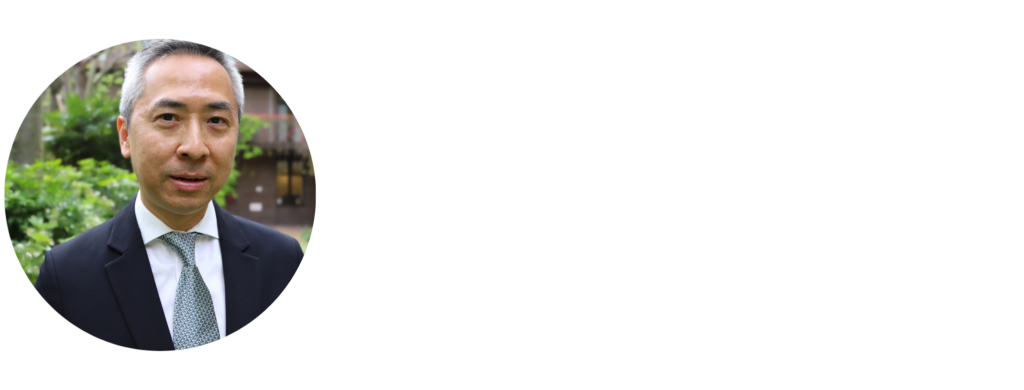
Written by Frankie Ng, Litigation Supervisor
What is a Part 36 Offer and How Does It Work?
What is a Part 36 Offer?
Part 36 is a self-contained settlement regime under the Civil Procedure Rules (“CPR”). It encourages parties to settle disputes at an early stage by attaching significant costs consequences to offers that are unreasonably rejected.
Unlike ordinary “without prejudice” settlement offers, a properly drafted Part 36 Offer carries automatic costs consequences unless the court considers it unjust to apply them. For that reason, experienced litigators regard Part 36 as one of the most powerful tactical tools available during litigation.
How does Part 36 work?
Either the claimant or the defendant may make a Part 36 Offer at almost any stage of proceedings.
The offer remains open for acceptance for a minimum period of 21 days (known as the “relevant period”).
If accepted within that period:
- the claim usually comes to an end;
- the defendant pays the agreed settlement sum; and
- the claimant is generally entitled to recover its costs up to the date of acceptance.
However, the real significance of Part 36 arises when the offer is not accepted.
What happens if the claimant rejects a defendant’s Part 36 Offer?
If the claimant proceeds to trial but fails to obtain a judgment that is more advantageous than the defendant’s Part 36 Offer, CPR 36.17 provides that, unless unjust:
- the claimant must pay the defendant’s costs from the expiry of the relevant period; and
- interest may also be payable on those costs.
This often means that a claimant who technically “wins” the case may nevertheless suffer a substantial financial loss because of the adverse costs order.
What if the defendant rejects the claimant’s Part 36 Offer?
The consequences can be equally severe.
Where a claimant obtains a judgment at least as advantageous as its own Part 36 Offer, the court will usually order the defendant to pay:
- indemnity costs from expiry of the offer;
- enhanced interest on damages;
- enhanced interest on costs; and
- an additional amount calculated under CPR Part 36 (subject to the statutory cap).
These consequences are deliberately punitive. They are intended to encourage parties to settle genuine disputes rather than gamble on the outcome at trial.
The recent High Court decision – The Wine Enterprise Investment Scheme Ltd v Crowe U.K. LLP
The Facts of the Case
The decision in The Wine Enterprise Investment Scheme Ltd v Crowe U.K. LLP provides an important lesson for anyone involved in commercial litigation.
The claimant sought damages exceeding £8 million against its auditors. Before trial, the defendant made a Part 36 Offer of £3.175 million plus costs. The claimant rejected the offer and proceeded to trial.
Ultimately, however, the claimant recovered only around £102,000, representing approximately 1.6% of the amount originally claimed. The lesson of this is that winning does not necessarily mean you are the successful party.
Perhaps the most striking aspect of the judgment is the court’s approach to determining who was the “successful party”. Although the claimant obtained damages, the judge looked beyond the technical result. Instead, the court asked a more practical question.
Who really won the litigation?
The court concluded that:
- the claimant failed on the overwhelming majority of its case;
- it recovered only a tiny fraction of what it sought;
- it would never have commenced proceedings merely to recover the modest amount eventually awarded.
The judge described the outcome as a “Pyrrhic victory” and held that, in substance, the defendant was the successful party. Accordingly, the claimant was ordered to pay 85% of the defendant’s costs incurred before expiry of the Part 36 Offer.
Matters worsened further still, as the claimant had also rejected the defendant’s Part 36 Offer. Because it failed to beat that offer at trial, CPR 36.17 applied.
The court held there was nothing unjust about enforcing the normal Part 36 consequences.
As a result, the defendant recovered:
- all of its costs after expiry of the Part 36 Offer; and
- interest on those costs.
The court emphasised that the burden of showing injustice is a “formidable obstacle” and that the ordinary Part 36 consequences should not lightly be displaced.
Practical lessons
This judgment contains several important lessons for litigants.
- Valuing your case realistically is essential.
Overestimating the value of a claim can lead to disastrous costs consequences.
- Every Part 36 Offer deserves careful consideration.
Rejecting an offer should never be an emotional decision. The commercial risks must be evaluated objectively.
- Litigation is about proportionality.
Recovering a small sum after pursuing an expensive claim may amount to a practical defeat, even if liability is technically established.
- Costs often become the most significant issue in litigation.
In substantial commercial disputes, legal costs frequently exceed the damages eventually recovered. A well-timed Part 36 Offer can dramatically alter the financial outcome of a case.
Final thoughts
Part 36 is far more than a procedural technicality. It is one of the most effective strategic tools available in English civil litigation.
A carefully drafted Part 36 Offer can create significant settlement pressure, protect a party’s position on costs and, in many cases, determine the overall financial outcome of the litigation.
Whether you are bringing a claim or defending one, obtaining specialist advice before making or rejecting a Part 36 Offer can make the difference between commercial success and an expensive mistake.
Have questions? Get in touch today!
Call our office on 020 7928 0276, we will be taking calls from 9:30am to 6:00pm.
Email us on [email protected].
Or, use the contact form on our website. Simply enter your details and leave a message, we will get right back to you: https://lisaslaw.co.uk/contact/
For more updates, follow us on our social media platforms! You can find them all on our Linktree right here.