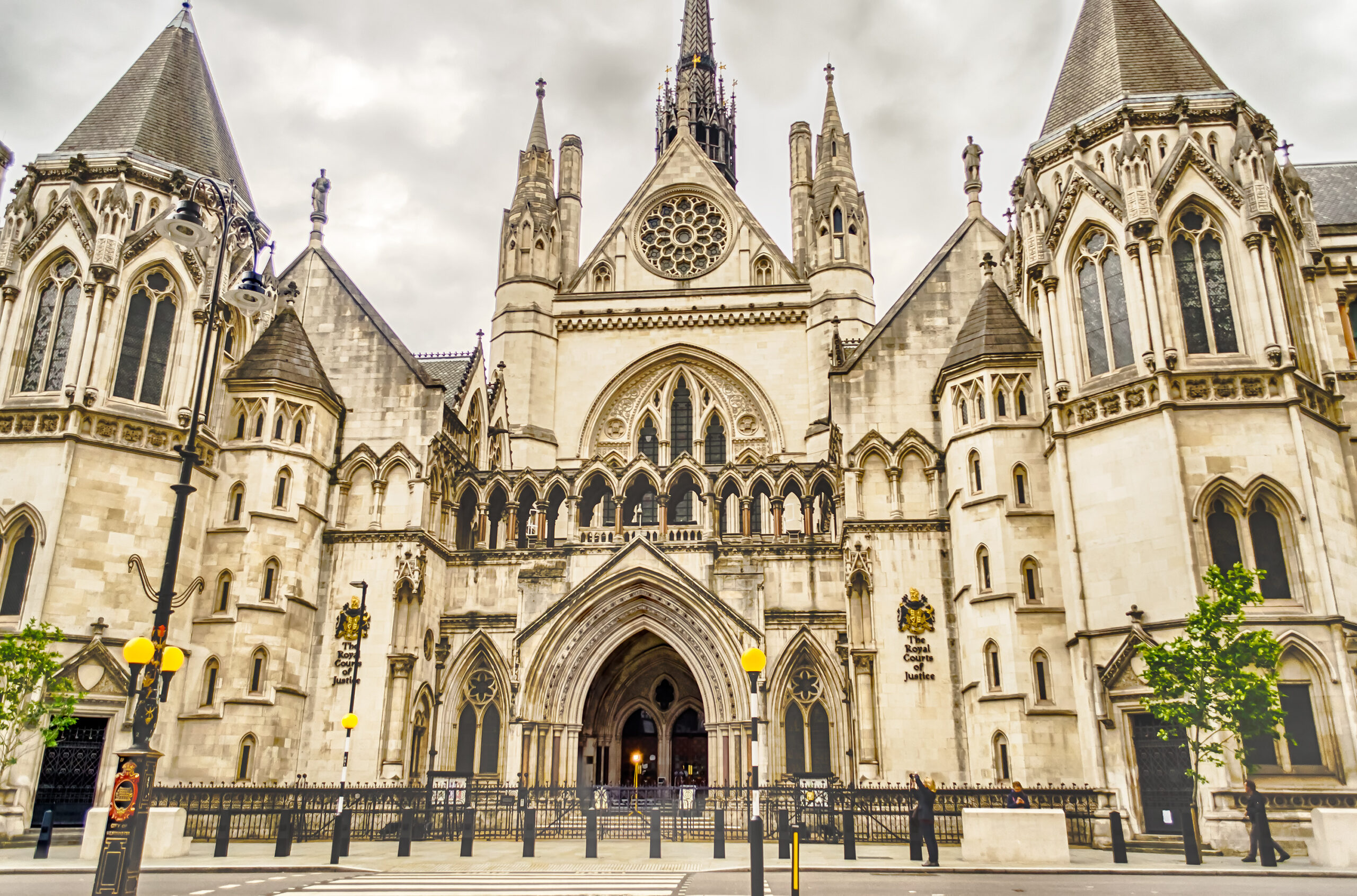
On 10 July 2026, the High Court handed down its judgment in R (AYA) v Secretary of State for the Home Department [2026] EWHC 1742 (Admin), a case concerning the National Referral Mechanism (NRM) and removals to France under the UK-France “one in, one out” scheme.

Written by Beryl Gao, Legal Assistant
The case considered whether the Secretary of State acted lawfully when amending the Modern Slavery statutory guidance to remove the ability to request reconsideration of negative Reasonable Grounds (RG) and Conclusive Grounds (CG) decisions where removal to certain third countries was intended.
The High Court held that the amendment was unlawful. Mr Justice Sheldon found that the change weakened the effectiveness of the UK’s victim identification system, amounted to an unlawful fetter on discretion, and frustrated the purpose of the Modern Slavery Act 2015.
However, the court rejected most of the individual challenges brought against removal-related decisions.
Background
The claimants, anonymised as AYA, EXR, GIP, HRE and KAG, were individuals who had either been at risk of removal, or had already been removed, to France under the bilateral agreement described in the judgment as the treaty on the prevention of dangerous journeys. The scheme was referred to internally as Operation Hillmore.
The claims were heard together because they raised common issues concerning removals to France, alongside individual challenges relating to trafficking decisions, inadmissibility decisions, certification decisions and, in AYA’s case, the refusal of VTS leave.
The central issue concerned an amendment made on 17 September 2025 to paragraph 14.216 of the statutory guidance issued under section 49 of the Modern Slavery Act 2015.
Before the amendment, individuals who received a negative Reasonable Grounds or Conclusive Grounds decision could request reconsideration where further evidence became available.
The amendment removed this ability where the Secretary of State intended to remove the person to a country that was a signatory to both the Council of Europe Convention on Action against Trafficking in Human Beings (ECAT) and the European Convention on Human Rights (ECHR).
The claimants argued that this amendment weakened the UK’s victim identification system and was therefore unlawful.
The High Court’s Decision
The High Court held that the amendment to the statutory guidance was unlawful.
Mr Justice Sheldon held that section 49(1) of the Modern Slavery Act 2015 requires the Secretary of State to maintain an effective system for identifying victims of slavery and human trafficking.
The court found that removing the ability to request reconsideration significantly weakened that system because potentially important new evidence could not be considered before a person’s removal.
The court therefore concluded that the amendment undermined the effectiveness of the statutory victim identification mechanism.
They also held that the amendment breached the Padfield principle, as it frustrated rather than promoted the purpose of the Modern Slavery Act 2015.
Unlawful Fetter on Discretion
The court further held that paragraph 14.216 amounted to an unlawful fetter on discretion.
Although the Secretary of State retained an implied power to reopen adverse decisions, the evidence showed that reconsideration was generally only exercised where legal proceedings had been threatened.
The court found that this prevented the Secretary of State from considering new evidence that could be important when determining whether an individual was a victim of trafficking.
Other Issues Considered by the Court
The court rejected the challenge based on the Tameside duty, finding that the Secretary of State had taken reasonable steps to obtain relevant information before introducing the amended guidance.
The court also considered the territorial scope of ECAT and Article 4 ECHR. It accepted that there was at least an arguable view that ECAT may apply to victims who are present in a contracting state even where the trafficking occurred elsewhere. However, it rejected the argument that Article 4 ECHR necessarily has the same extra-territorial scope.
Most of the individual challenges were unsuccessful.
AYA’s challenges to the refusal of VTS leave, the inadmissibility decision and the certification decision were dismissed. EXR’s challenge to the negative Reasonable Grounds decision relating to Ethiopia and Belarus failed. HRE’s challenge to the negative Conclusive Grounds decision and certification also failed. KAG’s challenges to certification and inadmissibility were unsuccessful.
GIP was the only claimant who succeeded in challenging an individual trafficking decision, with the court holding that the negative Reasonable Grounds decision in his case was unlawful.
What Does This Mean?
The judgment confirms that reconsideration of negative NRM decisions forms part of the statutory process for identifying victims of trafficking. Where further evidence becomes available before removal, it is important that such evidence is properly considered.
However, the judgment does not mean that removals to France are automatically unlawful. The court accepted that France remains a safe third country for asylum purposes and noted that asylum seekers there are able to access accommodation, financial support and healthcare. The court also observed that trafficking-specific recognition and support in France may be more limited, particularly where the trafficking took place outside France.
More generally, the judgment confirms that a policy may be unlawful where it undermines the statutory purpose of section 49 of the Modern Slavery Act 2015 or operates as an unlawful fetter on discretion.
Conclusion
The decision in AYA confirms that reconsideration is an important part of the statutory process for identifying victims of trafficking. The High Court found that removing the ability to request reconsideration of negative NRM decisions was unlawful because it weakened the effectiveness of the statutory victim identification system.
While the judgment does not prevent removals to France under the relevant scheme, it confirms that policies relating to modern slavery and NRM decisions must remain consistent with the statutory framework and must not unlawfully restrict the exercise of discretion.
If you have received a negative NRM decision or are facing removal from the UK, our immigration team can advise you on your legal options and whether this judgment may be relevant to your case. Please contact us for tailored legal advice.
Have questions? Get in touch today!
Call our office on 020 7928 0276, we will be taking calls from 9:30am to 6:00pm.
Email us on [email protected].
Or, use the contact form on our website. Simply enter your details and leave a message, we will get right back to you: https://lisaslaw.co.uk/contact/
For more updates, follow us on our social media platforms! You can find them all on our Linktree right here.