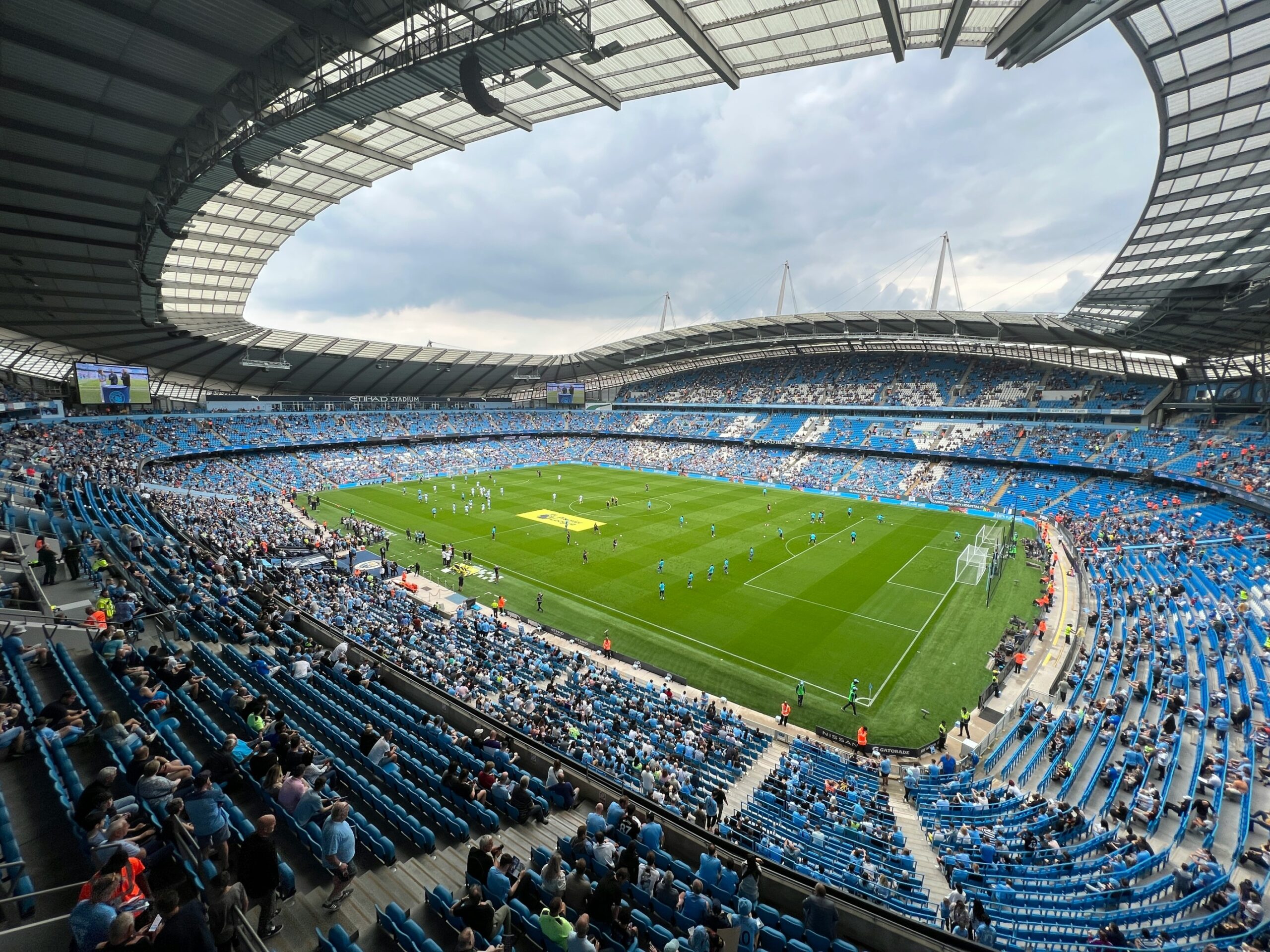
This week, the Premier League published a statement on Manchester City’s reported breach of financial rules following a four-year investigation. On first-instance, an independent Commission found the club guilty of serious breaches of the Premier League rules between 2009/10 and 2017/18, including the use of “sham” commercial arrangements to artificially inflate revenues and reduce reported costs.
The Commission concluded that these arrangements resulted in misstated accounts and concealed the true state of the club’s finances from its auditors and football regulators. The club has reportedly breached both Premier League and UEFA spending limits. These are subject to appeal and the club denies all wrongdoing.

Written by Yitong Guo, Senior Associate Solicitor
The Different Frameworks Explained
While making headlines and causing heated discussion on sanctions between fans, clubs and commentators, the case also raises a wider interesting legal question: what can happen when rules are breached and when does a regulatory breach become something more- potentially civil wrongdoing or even fraud?
The answer depends on the regulatory/legal framework applied, and it is not to be confused.
The Premier league regulates the Premier League competition through its own Rules, which form a contract between the League and its member clubs. It investigates and prosecutes breaches of those Rules and can impose or refer matters for sporting/financial sanctions.
Whilst the FA is the national governing body for football in England, it approves/sanctions competition rulebooks, including the Premier League’s, and has its own disciplinary jurisdiction. Its current Rules expressly provide for situations where alleged misconduct overlaps with a Premier League breach, with the FA and Premier League able to agree which body should act.
The Independent Football Regulator (IFR) was discussed in my previous article. It operates under statutory powers. Although the IFR is not directly involved in the Man City proceedings discussed here, it is included for comparison purpose.
The table below illustrates the different legal frameworks that may apply and likely outcomes.
| Framework | Key question | Possible consequences |
| Premier League Rules | Were the Rules breached? | Sporting or financial sanctions |
| FA Rules | Has the club breached the FA’s rules or disciplinary requirements? | Disciplinary or other sanctions under the FA Rules |
| IFR | Has the club complied with its statutory regulatory obligations? | Regulatory action under the statutory licensing regime |
| Civil law | Has an actionable legal wrong caused loss? | Damages or other civil remedies |
| Criminal law | Has a criminal offence been committed? | Fine, confiscation or imprisonment |
Legal Question
So, does a finding that a club breached its financial rules automatically mean that fraud has been committed?
Generally speaking, no, the fact that conduct has been found to constitute a serious regulatory breach does not automatically mean fraud has been committed. And it does not necessarily mean that a criminal offence has been committed, except for if the criminal offence is independently established.
Let’s look at the distinctions between regulatory, civil and criminal liabilities.
The Premier League operates under its own contractual and regulatory framework. A club may breach the rules to which it has agreed and face sporting or financial sanctions. The purpose is principally to regulate participation in the competition and enforce compliance with its rules.
Civil liability: If a person or company has made a fraudulent misrepresentation which causes another party legally recognisable loss, the consequences may include damages or other civil remedies. The focus is on the claimant’s rights and loss rather than the sporting integrity of the competition.
As for criminal liability: the legal basis is the Fraud Act 2006. Under the act, fraud may be committed by false representation, failure to disclose information or abuse of position.
Manchester City FC has until 2 October 2026 to appeal, without the route for a rehearing of the full evidence under the Premier League Rules.
There may be a subsequent further question on what happens when the evidence goes further – for example, hypothetically speaking where there are allegations of deliberately misleading financial information, sham arrangements or concealment, could the same evidence potentially expose individual directors, officers or advisers to civil or criminal liability?
As for now, no formal referrals have been made, and we cannot draw a definitive conclusion, but it will be interesting to keep an eye on the development of this case, bearing in mind this wider legal question.
Need legal advice? We’re here to help.
If you have questions about your situation or need advice on your next steps, our experienced legal team can help.
Call us on 020 7928 0276 between 9:30am and 6:00pm, or email [email protected].
You can also contact us online by completing our short enquiry form. Tell us a little about your situation and we’ll get back to you as soon as possible.
Not sure which service you need? Get in touch and we’ll help you identify the right team.