
Court proceedings in England and Wales are conducted in English. For parties and witnesses who are more comfortable using another language, this can create practical and legal issues that should be dealt with early.
Language is not just an administrative matter. If documents, witness statements or interpreter arrangements are not handled properly, the court may refuse to rely on the evidence, adjourn the hearing to another day, and make costs orders against the party responsible for the non-compliance.
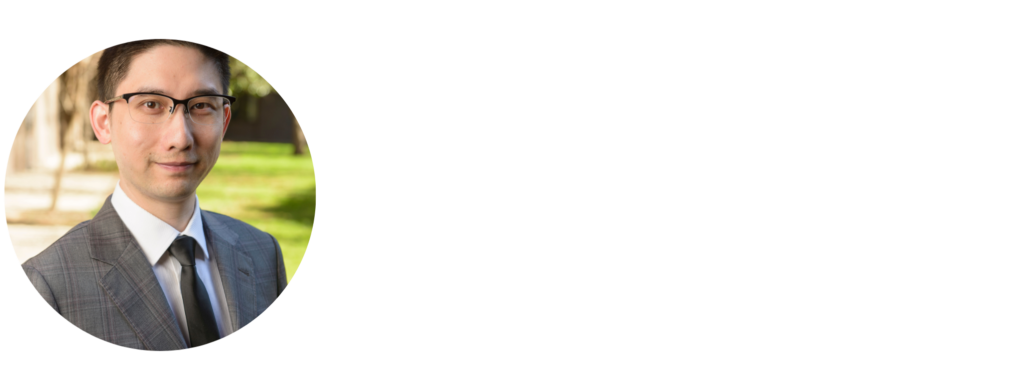
Written by Paul Cheuk, Solicitor
Translation and Interpretation: What is the Difference?
Translation and interpretation are often connected, but they are different. Translation concerns written documents. For example, a contract, bank record, official certificate or witness statement written in another language may need to be translated into English before it can be used in court.
Interpretation concerns spoken language. An interpreter assists during hearings, conferences, interviews or trials so that a person can understand what is being said and can communicate accurately.
Both can be important in litigation, but they arise at different stages and require different arrangements.
Foreign Language Documents in Court
Documents filed with the court should generally be in English. If a party wishes to rely on a document written in another language, an English translation will usually be required.
The translation should normally be certified by a suitably qualified translator. The purpose is to confirm that the English version accurately reflects the original document.
This can apply to foreign contracts, correspondence, receipts, identity documents, official records, company documents, bank statements and other evidence obtained overseas.
Parties should not leave translation until shortly before a hearing. If the court or the other side cannot properly understand the document, the evidence may be challenged or the hearing may be delayed.
Witness Statements Must Comply with Court Rules
Under the Civil Direction 32, paragraph 18.1, a witness statement must, if practicable, be in the witness’s own words and must in any event be drafted in the witness’s own language. The statement should also explain the process by which it was prepared, including whether an interpreter was used.
This means that if a witness is most comfortable giving evidence in Mandarin, Cantonese, Urdu, Polish, Arabic or any other language, the statement should not simply be drafted in English for convenience. It should be prepared in the language in which the witness can properly give their evidence.
Where the witness statement is in a foreign language, CPR Practice Direction 32, paragraph 23.2 requires the party wishing to rely on it to have it translated, file the foreign language witness statement with the court, and ensure that the translator signs the original statement and certifies that the translation is accurate.
The statement of truth should also be in the witness’s own language. This is important because the witness must understand the seriousness of confirming that the evidence is true. This is required by CPR Practice Direction 22, paragraph 2.6.
Interpreters at Court Hearings
In civil proceedings, the court will not arrange an interpreter for a party or witness. The party who needs interpretation is responsible for arranging and paying for a suitable interpreter. This should be done well in advance of the hearing.
Where more than one party or witness requires interpretation in the same language, the parties may be able to agree practical arrangements to avoid unnecessary duplication and cost. However, the interpreter must still be suitable for court use and able to interpret accurately and independently.
In criminal proceedings, the position is different. Parties cannot normally use their own interpreter for court hearings. Where an interpreter is required, the court will arrange one. However, it is sensible to notify the court as early as possible that an interpreter is needed. If the court is not informed in good time, the hearing may be delayed or adjourned.
The request should identify the exact language, dialect or regional variation required. It is not always enough to say that a person needs a “Chinese”, “Arabic” or “Indian” interpreter. For example, Mandarin and Cantonese are different spoken languages, and some witnesses may only be comfortable giving evidence in one of them. The same issue can arise with many other languages and dialects.
What matters is that the interpreter is able to interpret accurately for the particular person giving evidence or taking part in the hearing. The court and the parties should therefore be clear about the exact language needs from the outset.
Final Thoughts
The subjects of this article are not mere technicalities.
If a witness statement is not prepared in accordance with the rules, the other party may object to it. The court may refuse to admit the evidence, give it less weight, or require the defect to be corrected before the case can proceed.
In more serious cases, the hearing may have to be adjourned to another day. This can cause delay and additional expense. The court may also make costs orders against the party responsible for the failure, especially where the problem could have been avoided by proper preparation.
Anyone involved in court proceedings should consider language issues as early as possible. Leaving these issues until the day of the hearing can create serious problems.
At Lisa’s Law, we are experienced in assisting clients with multilingual litigation, certified translations, witness statements in foreign languages and interpreter arrangements for court hearings. We are well placed to identify language issues early, plan the necessary arrangements, ensure compliance with the court rules, and help present your case as effectively as possible.
Have questions? Get in touch today!
Call our office on 020 7928 0276, we will be taking calls from 9:30am to 6:00pm.
Email us on [email protected].
Or, use the contact form on our website. Simply enter your details and leave a message, we will get right back to you: https://lisaslaw.co.uk/contact/
For more updates, follow us on our social media platforms! You can find them all on our Linktree right here.