
Significant increases in service charges are no longer unusual. What is increasingly concerning, however, is not the level of the increase itself, but the lack of substantiation behind it. Leaseholders are frequently presented with sharply higher demands, supported by little more than broad assertions about rising costs or “necessary works,” with no meaningful documentary evidence.
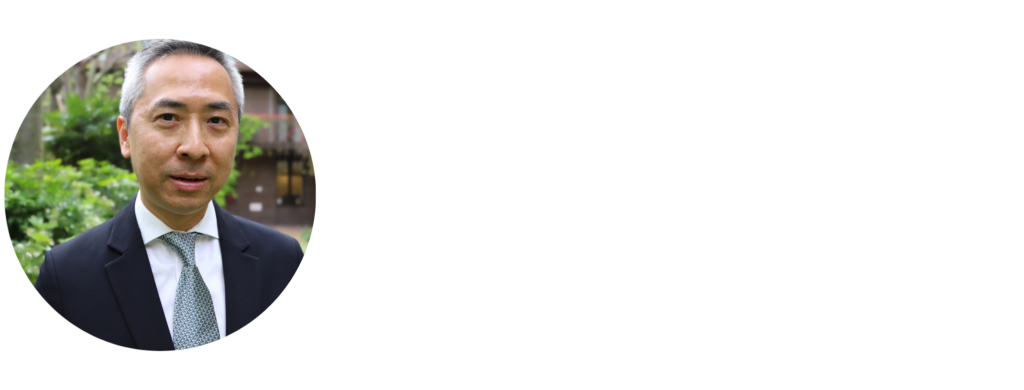
Written by Frankie Ng, Litigation Supervisor
From a litigation perspective, this is where the issue crystallises. The question is not simply whether a landlord is entitled to incur expenditure, but whether they can prove that the sums demanded are properly recoverable.
The legal framework is often misunderstood by managing agents. Under the Landlord and Tenant Act 1985, service charges are only payable to the extent that they are reasonably incurred and relate to works or services carried out to a reasonable standard. This is not a technicality. It is a statutory control on recovery. In practice, it imposes an evidential burden on the landlord or management company to justify what is being charged.
In many disputes, that burden is not met.
Shifting the dynamic away from the landlord
It is not uncommon to see demands issued without a clear breakdown, supported by incomplete accounts, or based on anticipated rather than actual expenditure. In some cases, key documents – contracts, invoices, or tendering records – are either missing or never properly obtained. From a contentious standpoint, these gaps are not minor defects; they go directly to enforceability.
Leaseholders are not passive recipients in this process and do have the ability to challenge service charges. The statutory rights to request summaries of costs and inspect supporting documentation are often the first step in shifting the dynamic. Once exercised properly, they force the landlord to move from assertion to evidence. Where that evidence is lacking, the strength of the landlord’s position deteriorates rapidly.
A further pressure point arises in the context of major works. The consultation requirements are frequently treated as a procedural formality, but failures in compliance can have substantive consequences. In litigation, defects in consultation are often deployed not merely as technical breaches, but as a basis to challenge the recoverability of significant elements of the claimed sums.
What role can the courts play?
Where matters escalate, the First-tier Tribunal (Property Chamber) becomes the central forum. Importantly, proceedings before the Tribunal are not limited to defensive action. Leaseholders can take the initiative and seek a determination on liability and reasonableness before any enforcement steps are taken. This is often a strategically advantageous position, particularly where the landlord’s evidential case is weak.
The courts have also made clear that reliance on lease wording alone is insufficient. In London Borough of Hounslow v Waaler [2017] EWCA Civ 45, the Court of Appeal confirmed that the exercise of a landlord’s discretion must itself be reasonable. This includes consideration of the financial impact on leaseholders and whether alternative, less expensive options were available. The decision is frequently relied upon in disputes where the scale of expenditure appears disproportionate to the benefit obtained.
In practice, many service charge disputes are won or lost well before any hearing. Early, focused engagement – particularly requests for underlying documents and targeted challenges to specific heads of cost—can expose weaknesses in the landlord’s position. In our experience, once a landlord is required to justify its figures in detail, it is not uncommon for positions to soften or for substantial reductions to be negotiated.
What distinguishes a routine complaint from a viable claim is evidence. A substantial increase, without substantiation, is not simply frustrating; it is often legally vulnerable.
If you are facing a significant increase in service charges and have not been provided with clear and adequate supporting documentation, it is important to consider your position at an early stage. These disputes are rarely resolved by accepting the demand at face value, and delay can weaken your strategic options.
How can our litigation team help?
Our litigation team regularly advises leaseholders on challenging service charges, from initial investigation through to representation before the First-tier Tribunal (Property Chamber). We focus on identifying evidential weaknesses, applying pressure at the right stage, and achieving commercially sensible outcomes.
If you would like to discuss a potential challenge or review your current position, please get in touch.
Have questions? Get in touch today!
Call our office on 020 7928 0276, we will be taking calls from 9:30am to 6:00pm.
Email us on [email protected].
Or, use the contact form on our website. Simply enter your details and leave a message, we will get right back to you: https://lisaslaw.co.uk/contact/
For more updates, follow us on our social media platforms! You can find them all on our Linktree right here.